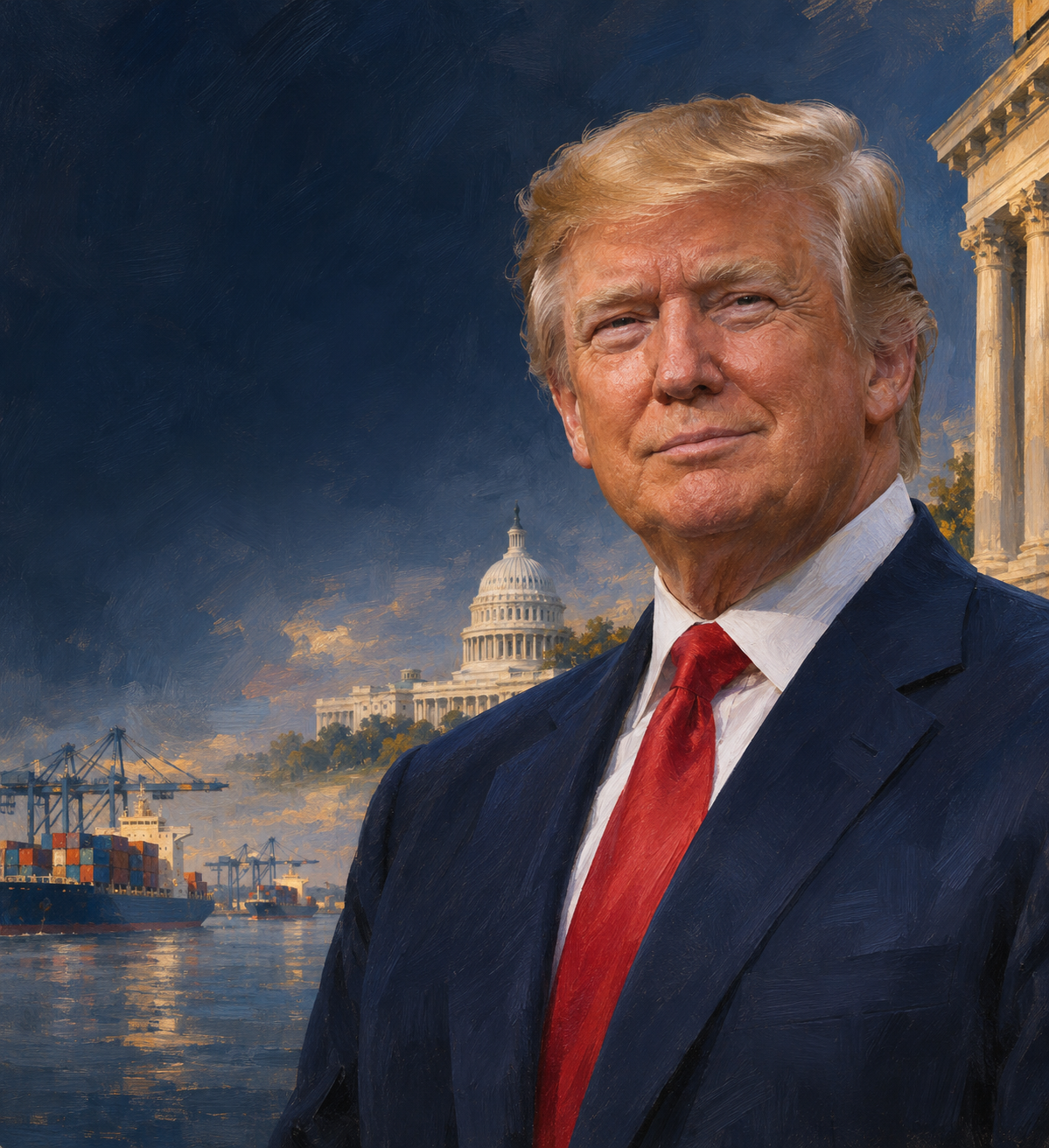
JANUARY 20, 2017 — JANUARY 20, 2021
What did a deal change?
The first Trump administration treated the terms of trade as a central question of national strength. It withdrew from the unimplemented Trans-Pacific Partnership, renegotiated the North American agreement, and imposed tariffs on selected imports from China and other countries. Foreign governments answered with concessions, countermeasures and their own political choices. The administration also gave embassy-level commercial advocacy a more organized path to Washington.
The United States–Mexico–Canada Agreement entered into force July 1, 2020, after negotiations among three governments and legislative approval. It replaced NAFTA in operation; its new labor, automotive and digital rules needed implementation and enforcement beyond the signing ceremony. A later USITC assessment of Section 232 and 301 tariffs found both greater domestic output in some affected sectors and higher prices and costs for some downstream users. That evidence complicates simple winner-and-loser claims.
THE PEOPLE AND THE MACHINERY
Institutions make policy real.
Under Secretary of State Mike Pompeo, Commerce Secretaries Wilbur Ross and USTR Robert Lighthizer, economic officers and commercial specialists pursued different parts of the agenda. State and Commerce launched a Washington-based Central Deal Team in February 2020 to coordinate help for embassy Deal Teams and American firms competing abroad. The team could marshal government expertise; a foreign buyer still chose the contractor. Congress’s BUILD Act created the U.S. International Development Finance Corporation, which began operations in 2020. Development finance involves project risk, local partners and public goals, not a guaranteed sale.
FOUR REGIONAL READINGS
Different regions.
Different kinds of progress.
Each chapter distinguishes proposal, agreement, implementation and measured outcome. These historical readings are not Commercial Diplomacy Index scores.
Finance and local decisions.
The new DFC combined and expanded federal development-finance tools. African partners and project sponsors could seek support for infrastructure and enterprise, but authorization, investment commitment and operating project were different stages. DFC’s launch record establishes the institution, not the eventual impact of every investment. Commercial relationships also depended on African governments and businesses choosing their own priorities.
Assessment: The institutional shift added a tool for potential projects; country-level outcomes need project evidence.
Pressure and partial bargains.
Trump withdrew the United States from TPP in 2017 before it took effect domestically. The U.S. and China then moved through tariffs, retaliation and the January 2020 Phase One agreement. Its purchase commitments and structural provisions were agreed terms, not proof that every target was fulfilled. Separately, the U.S.–Japan trade and digital trade agreements entered into force January 1, 2020. Japanese and Chinese counterparties shaped both negotiations.
Assessment: The administration achieved a narrower Japan agreement and a partial China accord while the broader Pacific pact proceeded without the United States.
Allies and contested tariffs.
The administration used Section 232 national-security tariffs on steel and aluminum, including imports from allies. European governments responded and negotiated. The later USITC study found that affected U.S. production rose in some industries while costs for downstream users increased. A tariff is an import measure and a bargaining tool; it is not itself an export contract. Disagreements over trade and security did not erase the substantial transatlantic economic relationship.
Assessment: The tariff strategy altered bargaining positions and domestic incentives, with costs that varied among producers and buyers.
A new North American rulebook.
USTR, Mexican and Canadian negotiators replaced NAFTA with USMCA, which entered into force in 2020. The agreement covered labor, environment, agriculture, autos and digital commerce. Mexican labor reform and U.S. congressional negotiations were part of the path to approval. Rights on paper required complaints, inspections and remedies to make a difference to workers. The pact’s entry into force was a legal milestone, not a count of jobs created.
Assessment: USMCA was the signature regional agreement of this term, jointly negotiated and still dependent on enforcement.
THE YEARS IN OFFICE
Milestones and handoffs.
- U.
U.S. withdrawal from the unimplemented TPP shifts Pacific strategy.
Tariffs, retaliation and North American renegotiation reshape relationships; Japan and China talks advance.
USMCA and Japan agreements operate; China Phase One is signed; DFC begins and the Central Deal Team launches.
THE EDITORIAL ASSESSMENT
Deals, enforcement and the embassy.
The first term combined pressure at the border with closer coordination for overseas bids. It produced an operative North American agreement, a narrower Japan arrangement and a partial China bargain. Tariffs raised output in some protected sectors and costs in others. The DFC and Deal Teams expanded institutional capacity, but their names cannot stand in for independently measured investment or employment outcomes.
Evidence and editorial method
Primary government records, official agreement materials and independent federal analysis are linked beside the claims they support. Government estimates and announcements are attributed to their agencies; they do not independently establish every later job, contract delivery or community benefit. This profile distinguishes proposals, signed instruments, agreements in force and outcomes. The portrait is editorial art, not an archival photograph.
Read the presidential timeline for the neighboring administrations.