JANUARY 20, 2021 — JANUARY 20, 2025
Who shares the gains?
Joe Biden inherited USMCA, China tariffs and an unsettled global economy after the pandemic. USTR Katherine Tai described a worker-centered trade policy, making labor rights, supply chains and equitable participation part of the negotiating story. That approach connected external economic relationships to domestic industrial policy; it did not make every announced factory or project a completed outcome.
The administration pursued smaller economic arrangements rather than a single sweeping free-trade pact. The U.S.–Taiwan Initiative on 21st Century Trade produced a first agreement signed in 2023 that entered into force December 10, 2024. Its subjects included customs, regulation, services and small businesses; later proposed chapters were not the same agreement. The Indo-Pacific Economic Framework addressed supply chains, clean economy and fair economy with partners, while its trade pillar remained unfinished.
THE PEOPLE AND THE MACHINERY
Institutions make policy real.
Secretary of State Antony Blinken, Commerce Secretary Gina Raimondo and USTR Katherine Tai worked with ambassadors, commercial officers, labor groups and partner governments. In June 2024 Biden signed a memorandum creating an Economic Diplomacy Action Group, chaired by State with Commerce and USTR, to advance exports, attract investment and strengthen supply chains. The 2019 Championing American Business through Diplomacy Act supplied a statutory basis. The group’s creation was an institutional action; the announcement did not measure its later results. Embassy Deal Teams continued interagency project support rather than granting contracts themselves.
FOUR REGIONAL READINGS
Different regions.
Different kinds of progress.
Each chapter distinguishes proposal, agreement, implementation and measured outcome. These historical readings are not Commercial Diplomacy Index scores.
Infrastructure and negotiating partners.
Biden hosted an Africa leaders summit in 2022. The United States and Kenya pursued a Strategic Trade and Investment Partnership, with rounds continuing in 2024; it was not a completed free-trade agreement. During Biden’s 2024 Angola visit, DFC announced a loan commitment of up to $553 million for Lobito rail and port work. Angola, Zambia and the DRC had their own development interests. A loan commitment is not proof of finished rail service or community benefit.
Assessment: The administration advanced a corridor concept and Kenya talks, each at a different implementation stage.
Frameworks and a first agreement.
Biden launched the Indo-Pacific Economic Framework in 2022 with regional partners. Its supply-chain, clean-economy and fair-economy arrangements were distinct from the unfinished trade pillar and did not function as a conventional tariff-cutting FTA. The first U.S.–Taiwan agreement entered into force in December 2024 through the two sides’ designated representative organizations. China policy also used export controls and inherited tariffs alongside engagement.
Assessment: Cooperation widened, while the limits of each framework and the unfinished trade pillar matter to the record.
Technology, supply chains and allies.
Biden and EU leaders established the Trade and Technology Council in 2021. Blinken, Raimondo and Tai worked with European counterparts on technology standards, supply chains, export controls and other issues. The forum was a recurring mechanism, not a comprehensive U.S.–EU free-trade agreement. Russia’s 2022 invasion of Ukraine brought coordinated sanctions and export controls with allies, linking economic tools to security; those tools should not be counted as export promotion.
Assessment: The transatlantic forum deepened coordination without completing the TTIP pact attempted in the Obama years.
Labor enforcement and regional opportunity.
The administration used USMCA’s labor provisions to examine specific facility-level concerns in Mexico, working through a mechanism established in the agreement inherited from Trump’s first term. USTR’s process shows that workers and petitioners can bring concerns forward; it does not mean every complaint is substantiated. Biden also launched the Americas Partnership for Economic Prosperity in 2022, later convening leaders and ministers. Its cooperation agenda was a forum, not a replacement for USMCA.
Assessment: Existing trade rules became a vehicle for labor enforcement while a wider hemispheric partnership remained a collaborative process.
THE YEARS IN OFFICE
Milestones and handoffs.
Tai outlines worker-centered trade; Biden and EU leaders establish the Trade and Technology Council.
IPEF and the Americas Partnership launch; Kenya talks advance; the first Taiwan initiative agreement is signed.
Taiwan’s first agreement takes effect; Biden establishes the Economic Diplomacy Action Group and visits Angola; the term ends in January 2025.
THE EDITORIAL ASSESSMENT
Workers, alliances and strategic investment.
Biden put worker rights, supply-chain resilience and alliance coordination at the center of economic diplomacy. The Taiwan first agreement reached entry into force, while Kenya negotiations, IPEF’s trade pillar and infrastructure commitments had different, less final statuses. The Economic Diplomacy Action Group and Deal Teams organized support across agencies. Their value ultimately depends on implementation, foreign partners and workers’ experience, not merely on the creation of a forum.
Evidence and editorial method
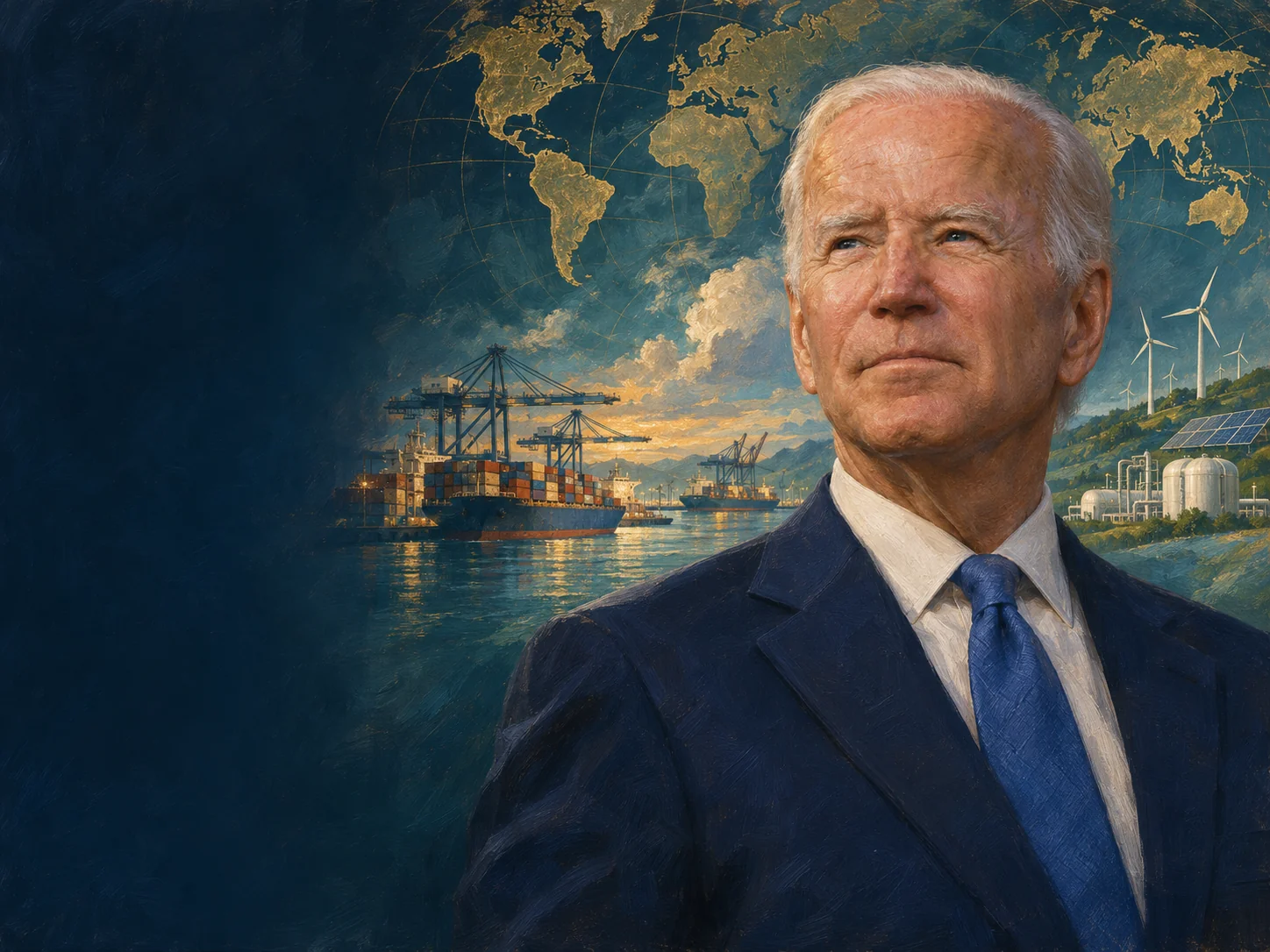
Primary government records, official agreement materials and independent federal analysis are linked beside the claims they support. Government estimates and announcements are attributed to their agencies; they do not independently establish every later job, contract delivery or community benefit. This profile distinguishes proposals, signed instruments, agreements in force and outcomes. The portrait is editorial art, not an archival photograph.
Read the presidential timeline for the neighboring administrations.